What a Game Turn Is Designed to Organize
See how a casino game turn organizes timing, player attention, and table procedure, making each phase easier to follow without adding needless cues.
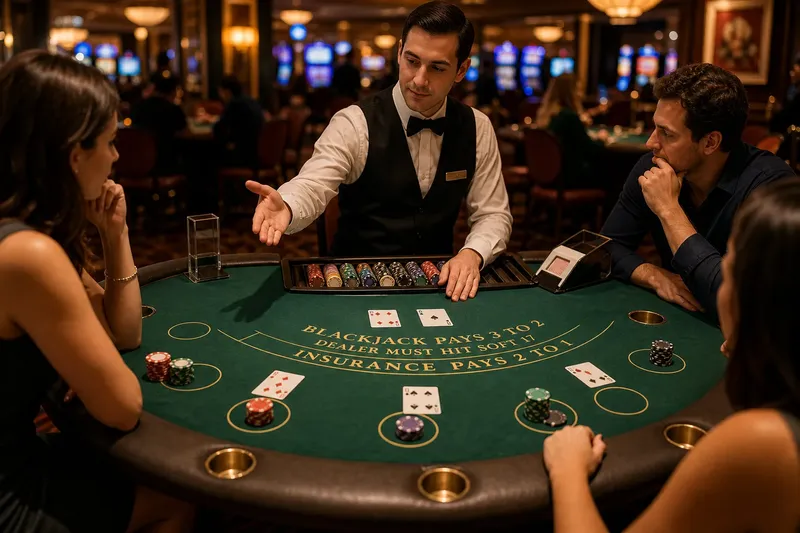
The dealer slides the cards forward, a player checks a hand, and someone at the next seat asks whether betting is still open. A casino game turn is the table’s choreography: it organizes who acts, what the dealer or interface does next, and how the round moves through its rules.
How does a turn organize attention?
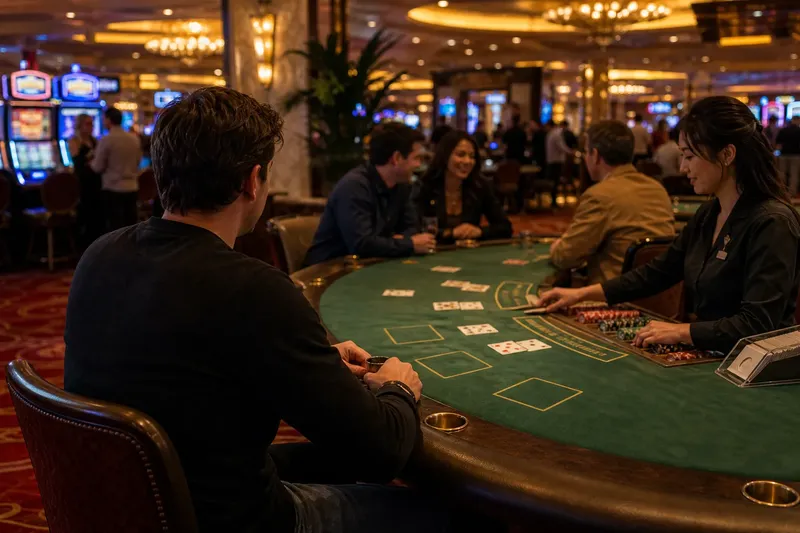
At a blackjack table, the dealer moves from one player to the next, then handles the dealer’s hand. In roulette, the table moves from accepting wagers to spinning the wheel and announcing the result. These sequences direct attention toward the task that matters at each moment.
That choreography is useful even when no player choice is available. It tells people where to look, whose action is pending, and when the group can shift its attention to the next round. A clear turn can also reduce interruptions: players have a better sense of when to speak, place a wager, or wait.
For designers, the aim is not to make every moment feel dramatic. It is to make the sequence easy to read through ordinary signals: the dealer’s movement, a spoken prompt, a highlighted seat, or a screen that shows whose turn comes next.
Why does pacing matter at a shared table?
Turns shape the social rhythm of a game. A brief pause can give a player time to make a choice; a dealer’s next action can bring the group’s attention back together. If the sequence is too hard to follow, conversation and play compete for attention.
Imagine a small group at a blackjack table where the dealer points to each player before inviting an action. The starting point is a table where two players sometimes speak at once and one misses the cue. The dealer adds a consistent gesture and waits for a clear response before moving on. The observable result is that each player can see whose turn is active; the tradeoff is a slightly more deliberate pace.
This does not mean every pause needs an animation or announcement. A repeated, ordinary cue can serve the group better than a flourish that draws attention away from the cards.
How can a game make its sequence easier to follow?
Clear turn design relies on a few consistent signals. On a screen, a prompt such as “Your turn” can identify the active player, while a separate status line shows what comes next. At a live table, a dealer’s gesture or brief spoken cue can do similar work.
For a quick design review, check each point and choose the next action based on what you observe:
- Active player: If the current player is obvious from a seat marker or dealer cue, keep that signal; if not, add a visible pointer or consistent gesture.
- Pending action: If players can tell what they are expected to do, retain the prompt; if not, state the action plainly, such as “hit or stand.”
- Turn order: If the next seat or player is apparent, leave the order as shown; if not, display or announce who acts next.
- Pause meaning: If a pause clearly means the player is deciding, preserve it; if players mistake it for a transition, add a brief cue that names the current phase.
- Action completion: If the table can tell that a selection has registered, keep the confirmation; if not, use a simple visual or spoken acknowledgment.
- Round transition: If players recognize that a round has ended, keep the existing signal; if not, mark the next round with a distinct but restrained cue.
These checks focus on attention and procedure, not on making a game more exciting. A signal should help someone understand what to do or where to look.
What makes a turn feel smooth without extra fuss?
A smooth turn has a readable order and enough time for the people involved to keep up. The sequence can be lively, but it should not require players to decode a new visual effect at every transition. Consistency matters more than decoration.
Not worth the effort: adding a separate sound, glow, or countdown for every small movement. Too many cues compete with conversation and with the game’s actual actions. Start with the dealer’s existing procedure or the interface’s clearest status display, then add a signal only where people repeatedly lose track of the sequence.
In a digital game, a simple turn-order strip may be more helpful than a full-screen transition. At a live table, a short verbal cue may work better than a long explanation. The right choice depends on what players can already see and hear.
What do players ask about a casino game turn?
Is a turn the same as a round?
Not always. A turn may refer to one player’s action, while a round can include several players and the shared resolution; the game’s rules establish how it uses each term.
Can a turn include no player decision?
Yes. A turn can organize a wager, deal, spin, or result even when the player has no choice after it begins.
Why does a dealer repeat a familiar cue?
A consistent cue helps players recognize whose action is due and keeps the sequence understandable as attention shifts around the table. Repetition is useful when it clarifies procedure, not merely when it adds ceremony.
Should every action receive a sound or animation?
No. Use extra feedback where people might otherwise miss a transition or fail to notice that an action registered. If the sequence is already clear, additional effects can make the table or screen busier without helping players follow along.
What should you notice while watching a game?
Watch how a casino game turn directs attention from one person or task to the next. Notice the dealer’s gestures, the screen’s turn-order cues, and the moments when players naturally look up or wait. That perspective reveals a turn’s social function: it gives a group a shared rhythm and a clear place to focus, without asking every moment to become a spectacle.