Table Rules and Screen Prompts: Two Ways to Learn a Casino Game
Compare table rules and screen prompts to see how pace, visibility, and pausing affect learning a casino game before you choose how to begin.
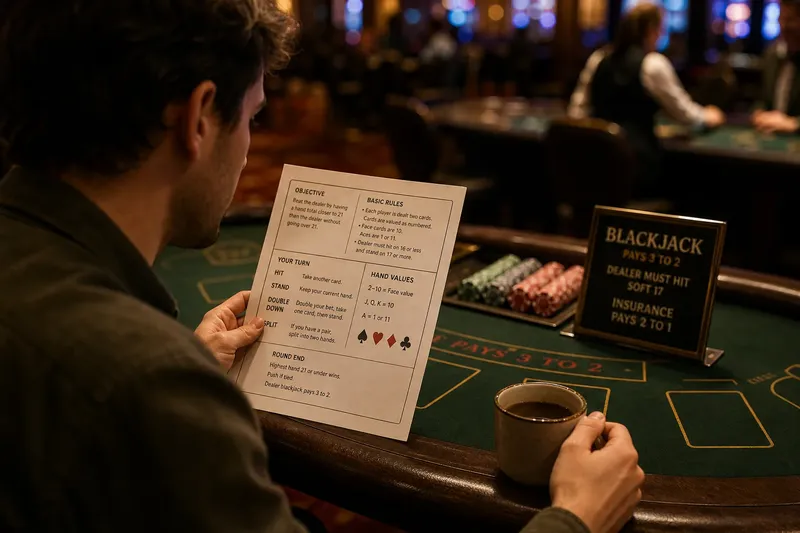
You unfold a casino game’s printed rules beside your coffee, then notice the table is already dealing. That small choice—read first or learn as you go—can shape how clearly the game makes sense. Table rules and screen prompts teach through different rhythms: one lets you set the pace, while the other places information inside the action.
Neither format is automatically easier. A rule sheet can be quiet but dense; a prompt can be immediate but easy to dismiss. If you are learning a game for a social visit or a casual session, it helps to know what each format makes visible, when it asks for attention, and whether you can pause without losing your place.
What does each format ask you to notice?
Printed table instructions usually collect information in one place. A layout may show the available bets, the order of play, and the actions a player can take. You can scan the page, return to a heading, or compare two rules without waiting for the next screen. But a compact card may rely on symbols or specialist terms that are unfamiliar to a newcomer.
On-screen prompts tend to deliver information near the moment it matters. A game might highlight a button, label a choice, or display a short explanation after you select an option. That timing can make an unfamiliar action easier to connect with its consequence. The trade-off is that the explanation may disappear, compete with animation, or cover other useful details.
Think of the distinction as reference versus sequence. Printed rules are often better for looking across the whole system. Prompts are often better at guiding a player through one decision at a time. The actual design varies: a clear table placard can be more readable than a cluttered interface, and a well-organized digital help screen can be more useful than a cramped rule card.
How do pace and visibility change the lesson?
A printed instruction sheet gives the learner control over tempo. You can read a paragraph twice, trace a diagram with a finger, or stop at a term you do not recognize. That freedom matters when the rules depend on a sequence or when several choices look similar. It also means the player must decide which parts to read before play and which can wait.
A prompt arrives with the game’s own rhythm. It may explain a choice at the table or during a digital round, which reduces the need to remember a long explanation. Yet the player may have only a brief moment to read before the action continues. If other people are waiting, even a pause that the interface permits can feel socially awkward.
Visibility is not just about font size. It includes where information sits, what it contrasts with, and whether the player can find it again. A printed placard stays in a physical location, so everyone nearby may be able to consult it. A screen can focus attention on a single instruction, but a prompt may be visible only to the person holding the device or seated at a particular station.
For a live table, the dealer’s explanation and the printed layout may work together. For a digital game, a prompt may be paired with a persistent help button or a rules menu. The useful question is not “Which format has more information?” but “Can I see the information I need, at the moment I need it, without losing my place?”
How can you compare the two over a week?
A short routine can reveal which format suits your learning style without turning a casual game into homework. Use a different day for each kind of learning, then spend the final day comparing what remained unclear. If you are visiting a casino, follow the venue’s posted rules and the table’s instructions; do not interrupt active play to study a placard.
- Day one: Choose a familiar game. Pick a game whose basic aim you already understand, such as a simple card game or a familiar casino table game. Keep the focus on how instructions are presented, not on wagering.
- Day two: Read the printed material. Look for the object of the game, the order of actions, the meaning of any symbols, and the point at which a round ends. Mark terms you cannot explain in your own words.
- Day three: Follow screen prompts. Use a free-play or demonstration mode if one is available. Notice whether prompts explain each choice, remain on screen long enough to read, and offer a way to review previous instructions.
- Day four: Check what stays visible. Compare the printed layout with the screen. Ask whether essential details—such as available actions or a special rule—remain easy to locate after the first explanation.
- Day five: Try a low-pressure explanation. Describe the game’s basic sequence aloud to a friend, or write a few plain-language notes for yourself. Separate what you understand from what still depends on a rule you have not checked.
- Day six: Revisit the harder format. Return to whichever format felt less clear. Look for a missing definition, a crowded layout, an instruction that appeared too late, or a prompt you could not reopen.
- Day seven: Choose your learning route. Decide whether you prefer to read first, follow prompts, or combine both. Keep the format that makes you comfortable asking a question before you act.
Say you are learning a card game from a placard before a casual visit. You read the sequence, but one unfamiliar term still leaves you uncertain. At the table, you ask the dealer to clarify it before joining; the expected observable result is that you can identify which action the term describes, rather than guessing during a round. The point is not to memorize every rule in advance. It is to notice where the format leaves a gap and choose a calm way to close it.
Which questions help you choose a learning format?
Can printed table rules be easier than screen prompts?
They can be, especially when you want to scan several rules at once or reread without waiting for a prompt. They may be harder if the print is small, the layout is crowded, or the terminology assumes prior knowledge.
Can on-screen prompts be paused or reviewed?
That depends on the game’s controls and interface. Look for a help menu, rules screen, or pause option before relying on a prompt as your only source of instructions.
What should I read before joining a live table?
Start with the object of the game, the available actions, any table-specific rules, and how a round concludes. If a detail remains unclear, ask staff before taking part rather than trying to infer it from another player’s choices.
What is not worth memorizing first?
It is usually not worth trying to retain every rare exception before you understand the ordinary flow. Learn the basic sequence and where to find the full rules; return to edge cases only if they affect a choice you are about to make.
How do you make the comparison fair?
Compare formats using the same questions. Can you locate the goal? Can you tell what action is available? Can you find an explanation after the first read? Can you pause without feeling rushed? These questions keep the focus on teaching design rather than on whether one game happens to be more familiar.
Also notice who the information is designed to serve. A placard may address everyone at the table, while an individual screen prompt can respond to one player’s selection. Shared instructions can support conversation, but they may not answer a personal question. Individual prompts can feel direct, but they may leave nearby players unable to follow what the learner sees.
For an invented comparison, imagine two versions of the same game. In the first, a printed card lists actions in small type; in the second, the screen introduces each action with a short label and keeps a rules icon visible. A learner could reasonably prefer the second for quick orientation, then use a fuller rule sheet to check the whole sequence. The expected observable difference is not greater skill, but fewer moments spent searching for where an explanation lives.
Keep the stakes out of the learning exercise. If you are in a real gambling setting, set personal limits before play and follow the venue’s rules. Learning a prompt or reading a placard does not tell you what outcome a game will produce.
What should you carry into your next game?
Use the format that lets you understand a choice before making it. Printed table instructions are useful when you want an overview and room to reread; screen prompts can help when guidance tied to a particular action is easier to follow. A combination is often practical: read the basic rules first, then use prompts or staff explanations to resolve specific uncertainties.
When comparing table rules and screen prompts, pay attention to pace, visibility, and the chance to pause—not just to how much text appears. The best learning aid is the one you can consult without losing your place or feeling pushed into a decision. If you cannot find an essential rule, stop and ask before continuing.