A Casino-Themed Game Night at Home Without Real Stakes
Plan a casino-themed game night at home with no-stakes props, clear turns, and an easy way to switch activities when the group is ready for a change.
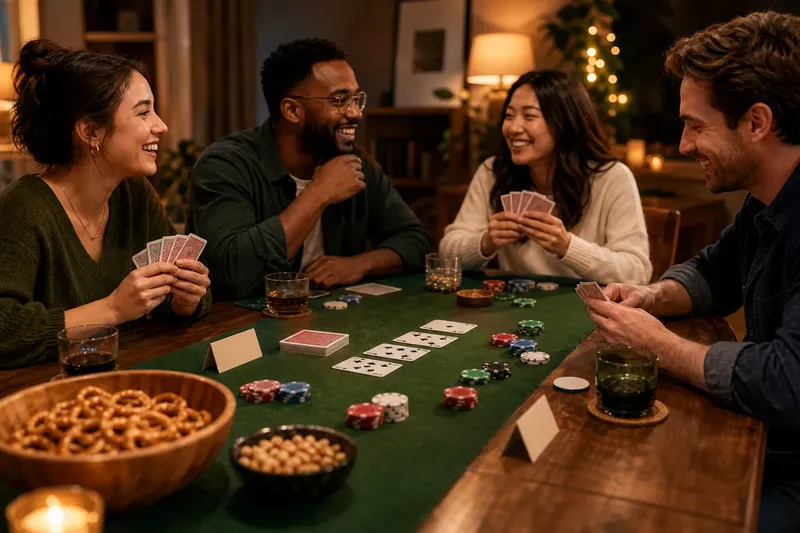
The cards are shuffled, a bowl of pretzels sits beside the table, and someone asks whether the chips are worth anything. A casino-themed game night at home works best when the answer is clear: the chips are props, the games are familiar, and nobody has to keep playing. A little planning can prevent the usual snags without turning a relaxed evening into a production.
How do you keep pretend chips from feeling like money?
Use objects that have no cash value and say so before the first deal. Poker chips, colored buttons, or paper slips can mark whose turn it is or add a playful visual, but don’t attach prizes, buy-ins, or cash-outs to them. If someone would rather not use chips, keep score with pencil marks or skip scoring altogether.
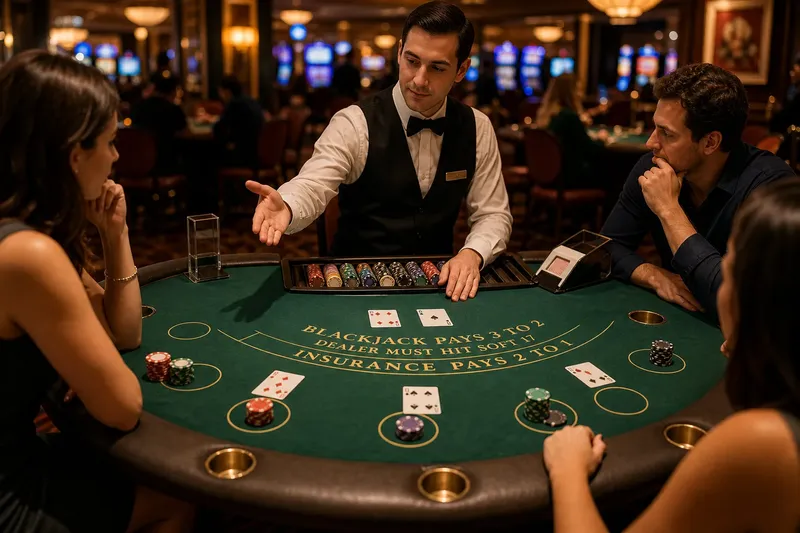
Give the evening a light theme with details that don’t imitate gambling pressure: a deck of cards, a green table runner, paper place cards, or a playlist of lounge music. Avoid betting language if it could make anyone uncomfortable. “Choose a card” or “take a turn” keeps the mood playful and makes the no-stakes boundary easy to understand.
What if nobody knows the same games?
Pick games with rules the group can explain in a few sentences, and have one familiar option ready. A simple draw-and-discard card game, a round of bingo using homemade number cards, or a dice game with a clearly stated goal can suit a mixed group. If someone already knows a game, ask them to teach one practice round rather than giving a long rules lecture.
Keep the first choice forgiving. A player who misses a rule can ask for a quick reminder, watch the current turn, or sit out until the next round, so the game can continue without making them feel rushed or singled out. For a group with different comfort levels, make a small menu on an index card: “cards,” “dice,” or “switch activities.” A choice is more useful than assuming everyone wants the same pace.
Why do turns start to drag?
Long pauses often come from uncertainty about whose turn it is, what action comes next, or whether the group is still waiting for someone. Put the active player’s place marker in view, and agree on a simple order before play starts. A coaster, playing card, or small bowl can serve as a turn marker; no special equipment is needed.
Say you have four friends at the kitchen table, and one keeps asking when to draw. Imagine the group agrees that turns move clockwise and the next player draws one card before choosing an action. The expected result is an easier-to-follow rhythm, with fewer interruptions to clarify the sequence. If the game still feels slow, finish the current round and choose a shorter activity rather than adding complicated rules.
What causes a friendly game to feel too competitive?
Scorekeeping can quietly shift the mood, especially if a player feels watched or judged. Before starting, decide whether points matter at all. You might count only to keep track of whose turn comes next, use a shared team goal, or leave scores off the table. Don’t tease someone for a poor hand or frame a lucky result as skill everyone should copy.
If a disagreement comes up, pause and check the printed rules or agree on a simple house interpretation for that round. The group can change course between rounds without making anyone the loser of a rules argument. Keep the focus on the conversation and the small decisions in play, not on proving who is best.
How can everyone get a fair turn?
Make the turn order visible and choose games that don’t leave one person waiting through long stretches. In a card game, pass the deal around after each round. In a group guessing game, rotate who reads the prompt. For a game with partners, switch partners between rounds if everyone is comfortable with that arrangement.
- Check whether everyone agrees on clockwise or counterclockwise play; if not, choose a direction together before dealing.
- Check whether a visible marker clearly identifies the active player; if not, use a coaster or playing card beside that person.
- Check whether newcomers can follow a practice round without scoring; if not, pause and explain the next action before continuing.
- Check whether anyone wants to pass or sit out; if so, let them do that without asking for a reason, or offer a low-pressure observer role.
- Check whether a proposed rule change affects everyone; if anyone is unsure, wait until the next round and ask the whole group.
- Check whether one person is repeatedly dealing or reading prompts; if so, rotate that job at the next round, or invite someone else to take it.
These small choices help a new player join without needing to interrupt or compete for attention. They also make it easier to notice when the current game is no longer working for the group.
What if people lose interest before the game ends?
Agree that anyone can call for a change at a natural stopping point. That might be the end of a hand, a round, or a short song on the playlist. Have an easy alternative nearby, such as a snack break, a conversation prompt, a familiar board game, or a movie someone already wants to watch. No one needs to justify wanting a different kind of evening.
It is not worth spending the afternoon making elaborate fake currency, building a complicated tournament bracket, or trying to recreate a casino floor. A few visible props and a clear way to switch activities do more for comfort than detailed décor or a packed schedule.
What should you do when the group gets stuck?
How do you explain the rules without slowing everything down?
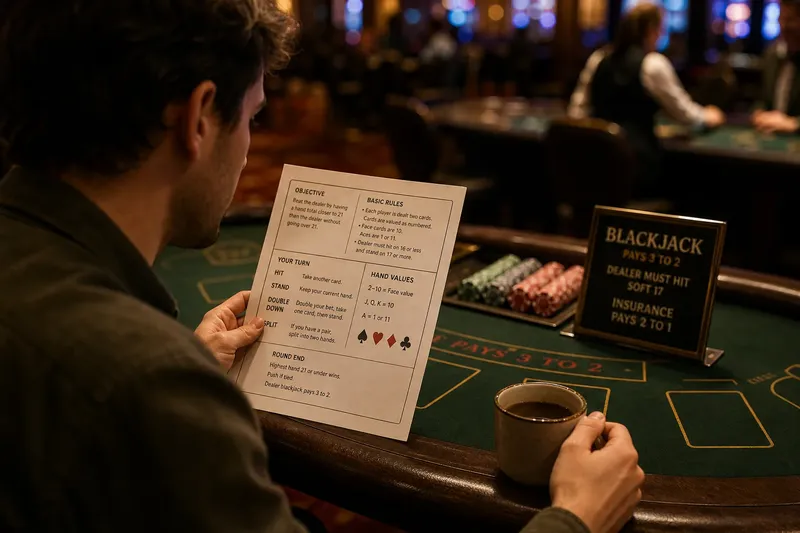
Give the goal and the next action, then play a practice turn. Point to a short rules summary if one is available, and save unusual edge cases for when they arise. A small demonstration is usually easier to follow than a speech about every possible move.
What if someone wants to keep score and someone else does not?
Choose a format that treats score as optional, such as playing a single round with no winner announced. You can also use a shared team goal so the group is working together rather than ranking individual players. Ask before the next round whether the arrangement still feels comfortable.
What if a player wants to leave early?
Let them step away without waiting for the whole game to end. Choose games that can continue with fewer players, or pause between rounds so nobody’s departure becomes a disruption. A relaxed invitation should leave room for people to join, sit out, or head home.
How do you keep the casino theme fun rather than intense?
Use visual touches such as a card-themed menu, a green cloth, or a playlist, while keeping the games free of money and prizes. If the theme stops feeling light, remove the props and move on to another activity. The point is to share an evening, not to reproduce the pressure of a gambling room.
How do you make a casino-themed game night at home feel easy?
Keep the plan small: familiar games, no-stakes props, visible turns, and an alternative activity within reach. A casino-themed game night at home doesn’t need a winner or a fixed ending to feel complete. Before guests arrive, tell them the chips are only for play and that changing activities is always fine; that simple expectation can leave more room for conversation and a genuinely relaxed night.